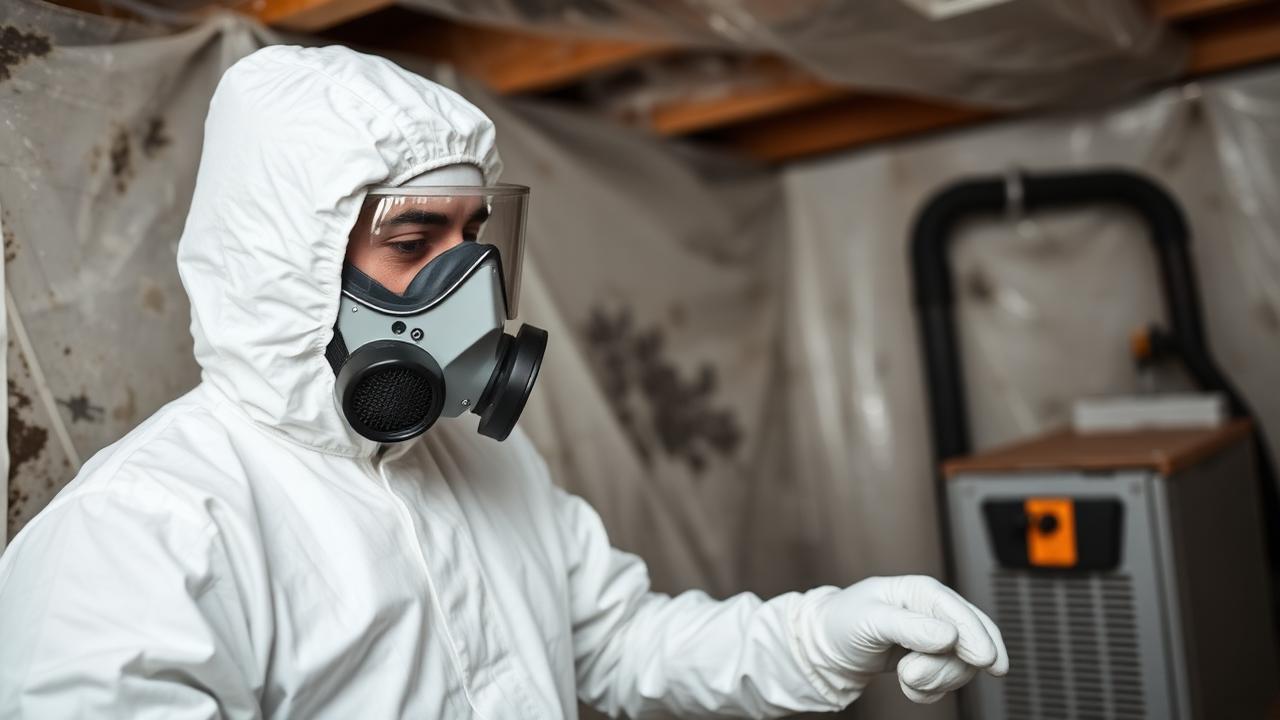
Category 3 water — sewage, storm surge, toilet overflow past the trap, ground water in living space — is heavily contaminated and, per the S500, must be treated as a biohazard. Everything about the job is different from a Cat 1 loss: your PPE, your containment, what you save, and what goes in a dumpster on day one.
What is a Cat 3 water loss?
A Cat 3 water loss is any loss where the water is grossly contaminated — sewage, toilet overflow from beyond the trap, storm surge, or ground water coming into living space. It's the contamination that makes it Cat 3, not how the water looks, and a Cat 1 or Cat 2 loss left sitting can become one. From that point the job is run as a biohazard: protection and containment first, porous materials out, drying last. The Category 3 water damage guide covers the classification in full.
Recognize It Immediately
Any of these facts makes the loss Cat 3 regardless of the water's appearance:
- Water contains sewage, biological waste, or agricultural runoff
- Water passed through insulation or ground before entering the structure
- Cat 1 or Cat 2 water that has degraded with time, temperature and contact with contaminants (mesophilic bacteria bloom)
- Storm-driven flood water or rising groundwater
For the full escalation logic see our Cat 2 vs Cat 3 breakdown.
PPE — Not Optional
A typical Cat 3 kit, with the respirator and final selection set by the hazard assessment:
- Full-face air-purifying respirator (APR) with P100 + organic vapor cartridges
- Full-body Tyvek suit with hood, taped seams
- Nitrile inner gloves + chemical-resistant outer gloves
- Rubber boots with taped Tyvek overboot
- Eye protection integrated with the APR
Full PPE breakdown here. Never let anyone — including the homeowner — enter the affected space without it.
Containment Before Extraction
Establish a decon corridor at the entry. Two zones minimum:
- Contaminated zone — the affected area, negative pressure with a HEPA-filtered AFD exhausting to exterior.
- Clean zone / decon — where PPE comes off in reverse order and enters a marked biohazard bag.
Poly containment (6-mil minimum) sealed with tape and zippers separates the two. Do not skip negative pressure — cross-contamination on a Cat 3 is the fastest way to a mold callback and, worse, a homeowner illness claim.
What Comes Out on Day One
Per the S500, porous materials in a Cat 3 environment are generally not salvageable:
- Carpet and pad — remove, bag as biohazard
- Drywall — cut a minimum 2' above the water line
- Insulation — remove regardless of visible saturation
- Upholstered furniture, mattresses, particle-board furniture — dispose
- Wood cabinets with particle-board substrate — usually not salvageable
Semi-porous items (solid wood framing, concrete, structural wood floors) can often be cleaned, decontaminated, and dried. Non-porous items (glass, metal, hard plastics) clean up fully with appropriate antimicrobial.
Extraction and Antimicrobial
Extract standing water with a dedicated waste pump — never through a truckmount used for Cat 1 work. Apply an EPA-registered antimicrobial appropriate for the pathogens of concern (list N or equivalent) after gross removal, before drying begins. See our mold prevention guide for why the EPA advises drying water-damaged areas and items within 24–48 hours.
Documentation Adjusters Expect on Cat 3
- Photos of the source and the standing water before any removal
- Written declaration of Category 3 status and rationale
- Signed materials-authorization form from the homeowner listing every disposed item
- PPE and antimicrobial SDS in the job file
- Post-remediation verification (PRV) readings before demobilization
Full documentation checklist here.
Where should you read next?
Category 3 is the loss where skipping protection, containment or cleaning gets people sick and gets companies sued, so run the same sequence every time. For the classification itself and how it drives scope, read Category 3 water damage; for why the term people search for maps onto it, read black water damage. If microbial growth is already established, that is mold work — see mold remediation certification. Drill the safety material with the practice exam.
Test yourself
The quickest way to find out whether this stuck is to answer questions on it cold. Answer the questions before you look anything up — the gap between what you can recall and what you can recognise is the gap that shows up on exam day.
New study material by email
New study guides, tools and practice questions, sent as they are published.
No spam. Unsubscribe anytime.
Related Articles
Ready to Pass the WRT Exam?
300+ practice questions, psychrometric calculators for drying, and study modules built by restoration pros.
Need the standard itself? Purchase the ANSI/IICRC S500 →