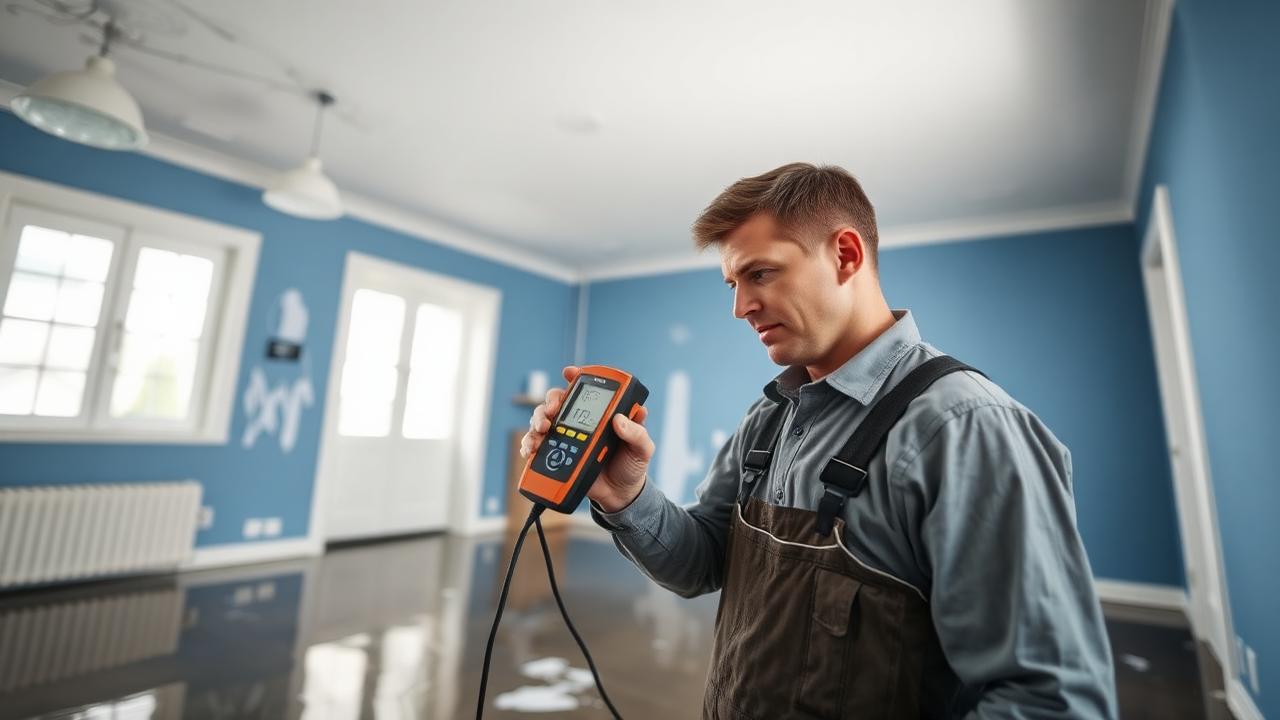
Every water damage job lives or dies by the numbers you write down. If your moisture meter is inaccurate — or you're using the wrong tool for the material — your drying goals are wrong, your daily monitoring is wrong, and your final release is indefensible. Here's the 2026 shortlist of meters we actually recommend, why each earned its place in the bag, and what to skip.
The Four Meters Every WRT Tech Should Own
You cannot cover a restoration job with one meter. The S500 assumes you have at least four instruments on the truck:
- Pin (invasive) meter — direct-contact reading of moisture content in wood and drywall.
- Pinless (non-invasive) meter — scans wall cavities, cabinet backs, and finished surfaces without leaving holes.
- Thermo-hygrometer — reads air temperature, RH, dew point, and GPP. See our psychrometry primer for why GPP matters more than RH.
- Thermal imaging camera — locates hidden moisture by surface-temperature differential.
Pin Meters Worth Buying
Delmhorst BD-2100 is still the industry standard for a reason. Wood-scale calibrated, ships with slide hammer electrode, and holds calibration under abuse. Priced around $475.
Protimeter Surveymaster (SM) combines pin and pinless in one unit — good starter meter for $500-ish. Not as durable as the Delmhorst but the dual mode saves time on residential losses.
Pinless Meters
Tramex MEP is the pinless gold standard — three-depth scanning, saltwater-resistant sensor, and reliable readings through paint and tile. Around $600 and worth every dollar.
Skip anything under $150. Pinless accuracy tracks price almost linearly, and a bad pinless reading on a cabinet back becomes a mold callback.
Thermo-Hygrometers
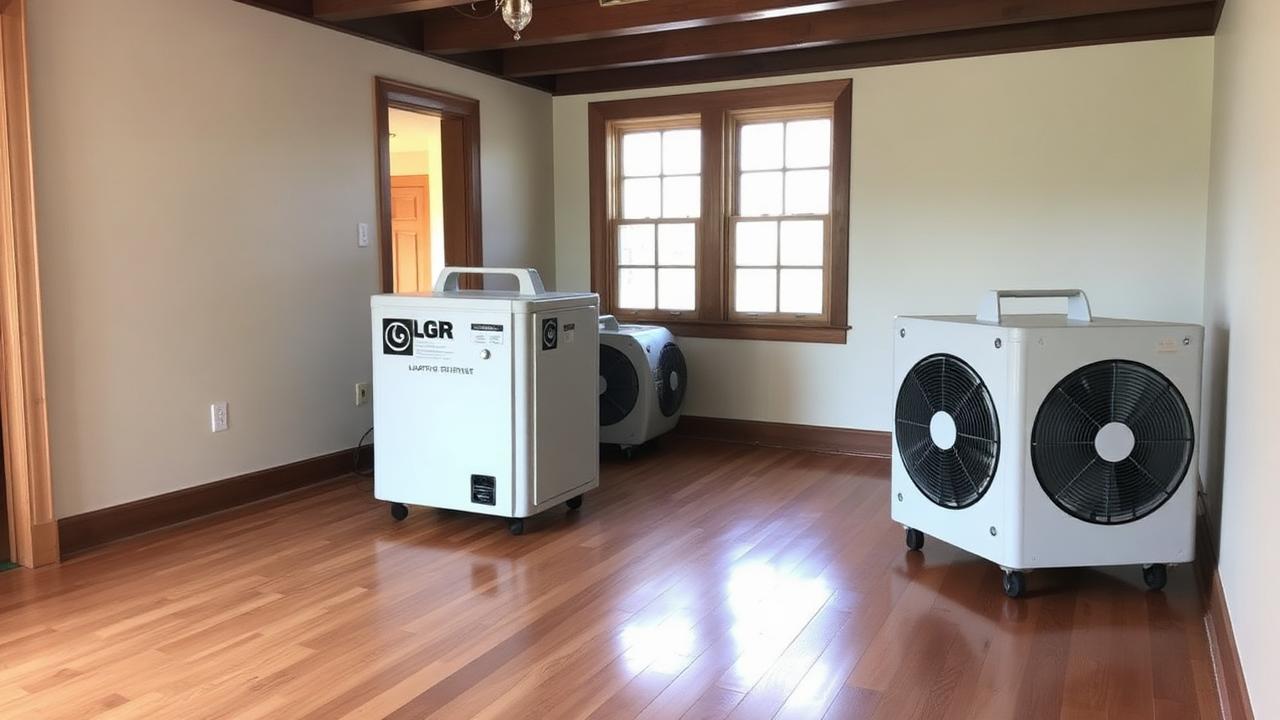
Protimeter Hygromaster 2 and the Extech RH390 both give you GPP directly on the display — non-negotiable for logging inlet vs outlet air on your LGR dehus. Budget $250–$400.
Thermal Imaging
FLIR C5 (~$700) is the sweet spot for restoration. It has enough resolution (160×120) to find wet drywall behind baseboard and streams to your phone for job-file photos. The pro-level FLIR E8-XT is nicer but hard to justify unless you're doing large-loss commercial work.
Thermal doesn't measure moisture — it shows temperature. Cold spots are usually wet, but always confirm with a pin or pinless before writing it down. Read our full moisture-meter guide for the confirmation workflow.
What About "All-in-One" Meters?
They exist and they're compromises. If your budget is truly tight, the Protimeter Surveymaster + a $250 thermo-hygrometer is a better $750 spend than any single all-in-one at the same price. Real losses need real accuracy.
Calibration and Documentation
Every meter drifts. Send pin meters back to the manufacturer annually and log the calibration certificate in your equipment file. Adjusters ask, and having the paper trail is what separates a Category 3 release from a Category 3 lawsuit.
Meter readings feed every S500 decision — drying goals, dehu sizing, daily monitoring, final release. If you're prepping for the WRT exam, drill those relationships with our practice questions until they're reflex.
Test yourself
The quickest way to find out whether this stuck is to answer questions on it cold. Answer the questions before you look anything up — the gap between what you can recall and what you can recognise is the gap that shows up on exam day.
New study material by email
New study guides, tools and practice questions, sent as they are published.
No spam. Unsubscribe anytime.
Related Articles

Ready to Pass the WRT Exam?
300+ practice questions, psychrometric calculators for drying, and study modules built by restoration pros.
Need the standard itself? Purchase the ANSI/IICRC S500 →