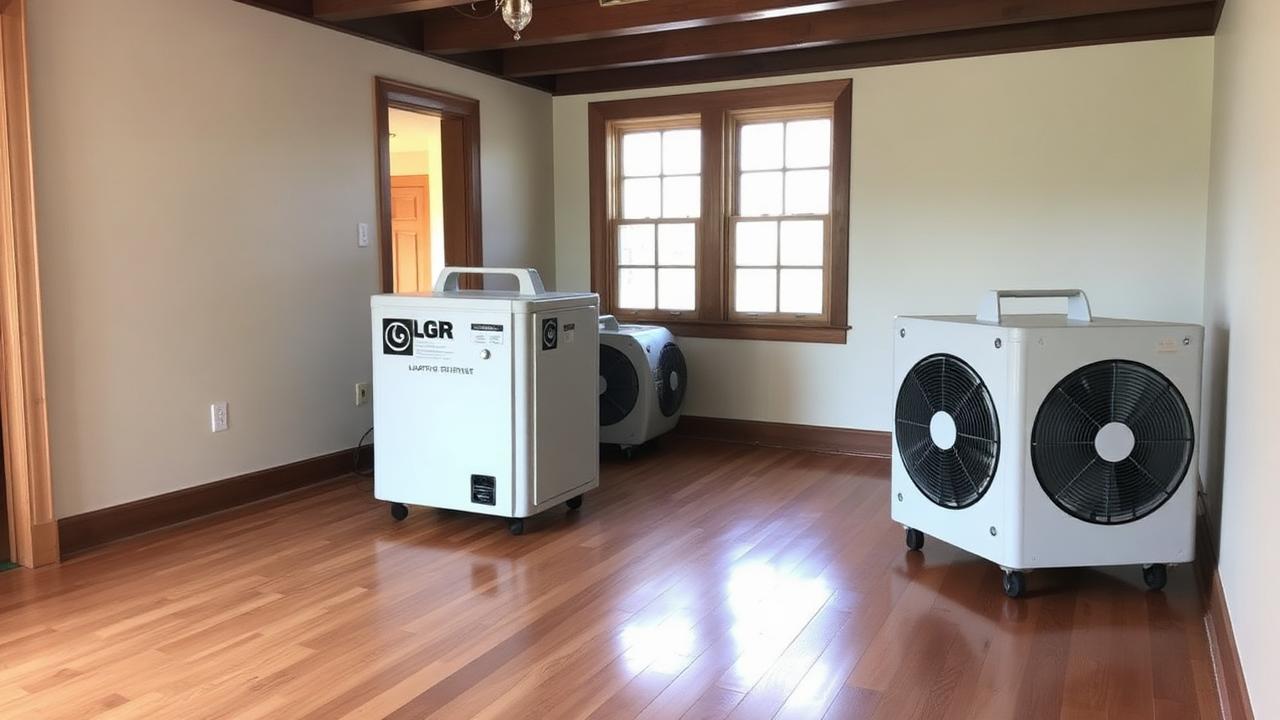
Insulation is the material most techs get wrong on their first solo job. It's hidden, it holds water, and it's the fastest path to a callback if you leave it wet. Here's what the S500 actually says about each type.
Fiberglass Batts
- Cat 1, lightly wet: Can sometimes be dried in place if the wall is opened and airflow reaches it. Verify with a pinless meter — target within 4 points of unaffected.
- Cat 1, saturated or matted: Remove. Once fiberglass compresses from water weight, R-value is permanently reduced.
- Cat 2 or Cat 3: Remove. Non-negotiable per S500.
Cellulose (Blown-In)
Almost always remove when wet. Cellulose acts like a sponge, holds moisture at the sill plate, and often has borate treatment that leaches when wet. Small isolated Cat 1 wet spots may be dryable with cavity ventilation but expect low success.
Wet cellulose insulation
Treat wet cellulose as a removal item and plan the job around what it leaves behind. Because it packs down and holds water against the sill plate and the bottom of the framing, the cavity behind it is usually wetter than the wall surface suggests. Once it's out, probe the plate and studs and map them like any other wet material — the moisture mapping template keeps those points consistent from day to day. Replacement goes in only after the framing is confirmed dry.
Spray Foam
Closed-cell foam is essentially waterproof — the foam itself doesn't absorb. But water can track along the substrate underneath. Open-cell foam holds water like a sponge. Cut back open-cell foam to dry substrate on any Cat 2+ loss.
Mineral Wool
Similar to fiberglass but more dimensionally stable. Cat 1 wetting often survives if the cavity is opened for airflow early. See how to set drying goals for how to define "dry" in a defensible way.
Does insulation dry out?
Some of it does, and only when the cavity is opened so airflow can reach it. Lightly wet fiberglass and mineral wool on a Cat 1 loss can dry in place; closed-cell foam doesn't take on water, though the substrate behind it can. Saturated or matted fiberglass, wet cellulose, open-cell foam on a Cat 2+ loss and anything touched by Cat 2 or Cat 3 water come out instead. Whether it dried is a meter reading against unaffected material, not a guess — see how to read a moisture meter.
The Universal Rule
Whenever you're unsure, cut a small inspection window and check with a moisture meter — don't assume. This is a classic scenario question on the WRT practice exam. For more on documentation, see what insurance adjusters want.
Reference: U.S. DOE insulation types overview.
Test yourself
The quickest way to find out whether this stuck is to answer questions on it cold. Answer the questions before you look anything up — the gap between what you can recall and what you can recognise is the gap that shows up on exam day.
New study material by email
New study guides, tools and practice questions, sent as they are published.
No spam. Unsubscribe anytime.
Related Articles
Ready to Pass the WRT Exam?
300+ practice questions, psychrometric calculators for drying, and study modules built by restoration pros.
Need the standard itself? Purchase the ANSI/IICRC S500 →