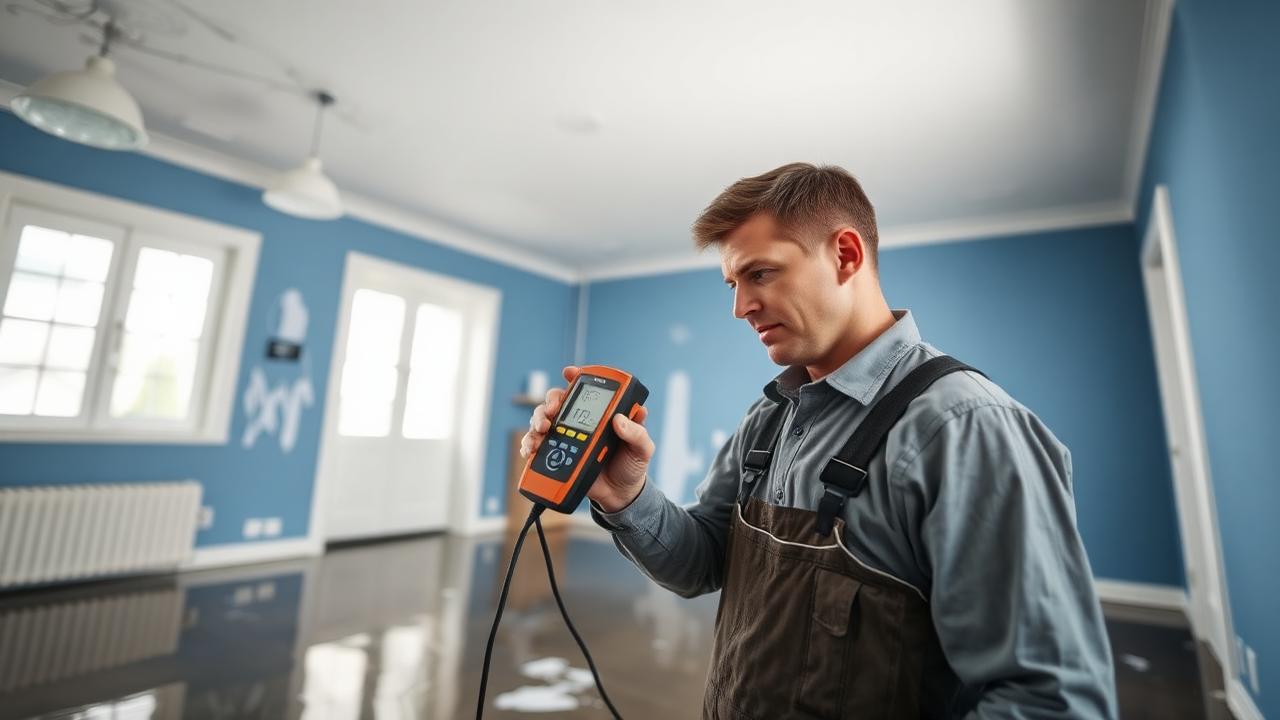
A room that is not drying is almost never a mystery. Evaporation from a wet material is governed by three things a technician controls on every job — the air moving across the surface, how dry that air is, and the temperature of the material and the air around it — and the drying triangle is the reminder that all three have to be working at once. Pull one side out and the other two cannot make up for it for long.
What is the drying triangle?
It is the working model behind structural drying: airflow strips saturated air off a wet surface, dehumidification gives the water vapor somewhere to go, and temperature raises the pressure that pushes water out of the material in the first place. The principles of drying in the ANSI/IICRC S500 are built on the same three controls, and the hands-on lab in an ASD class is where most technicians first watch a drying chamber stall because one side was ignored. The three are not interchangeable: more air movers do not fix wet air, and a hotter room does not fix still air.
What does airflow actually do?
Air moving across a wet surface removes the thin layer of saturated air sitting on it, so drier air can take its place and pick up more water. Without that movement the boundary layer sits there fully loaded and evaporation slows to a crawl even when the rest of the room reads dry. That is why air mover placement is about the surfaces, not the room: a unit pointed at open floor does nothing for the wet base of the wall behind it.
Airflow on its own has a limit. Push air around a closed room with no dehumidification and the humidity climbs with every hour the movers run, because the water leaving the materials has nowhere to go. A room where the relative humidity keeps rising while the walls stay wet is telling you the triangle is missing a side.
Why does humidity set the ceiling?
Water leaves a material only when the air next to it is holding less water vapor than the material's surface is pushing out, so the dryness of the air — measured as grains per pound, not relative humidity — decides how much evaporation is possible at all. Relative humidity changes every time the temperature moves; GPP does not, which is why the drying log tracks grains. Run the affected area, an unaffected area and the outside air through the GPP calculator and you can see whether the equipment is actually lowering the load or just circulating it.
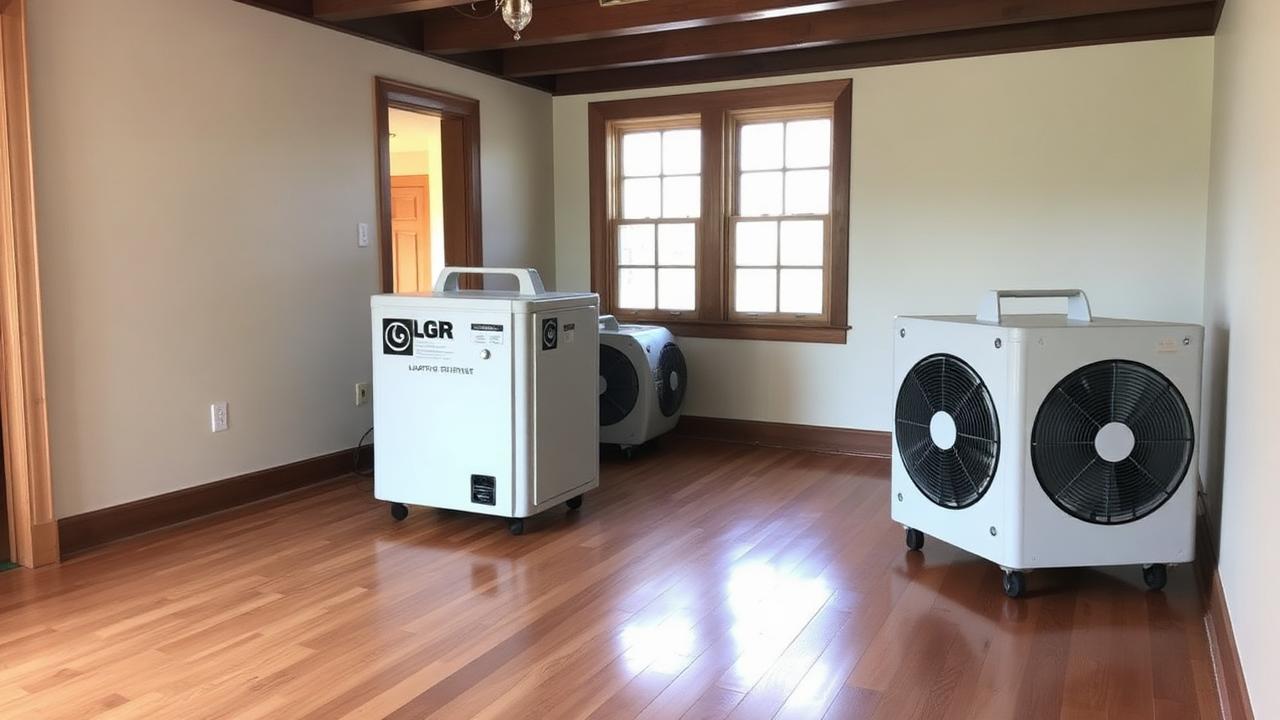
The dehumidifier is the humidity side of the triangle, and its exhaust is the honest report on it. If the air coming out of the unit is not meaningfully drier than the air going in, the unit is undersized, mis-set, or outside the conditions it is built for — the LGR versus conventional comparison walks through what to check before swapping it.
What does temperature change?
Heat raises the vapor pressure inside a wet material, so the water is pushed toward the surface harder, and warmer air can carry more moisture away at the same grains per pound. Cold, wet material drying in a cold room is the slowest case there is, which is why heated drying systems exist and why a technician who leaves a soaked crawl space at outdoor temperature in winter is planning a long job.
Temperature is also the easiest side to overdo. Warm air that is not being dehumidified carries its extra moisture to the coldest surfaces in the building and condenses there; the dew point calculator tells you how close a cold window, an uninsulated duct or a slab is to sweating. Every dehumidifier also has a temperature range where it performs best — the manufacturer's performance chart says where — so raising the room temperature can quietly move the unit out of its sweet spot.
How do you tell which side is limiting?
Read the room, then read the surfaces, and the pattern points at the missing side. Relative humidity climbing while materials stay wet means dehumidification is short. Grains per pound holding low and steady while the moisture readings refuse to move means the water is not being pulled out of the material — airflow across the wet surfaces, or the temperature of those surfaces, is the problem. A surface that feels cold and reads wet is starved of air or heat, or both.
The psychrometric chart makes this a picture instead of a hunch: plot the affected air, the unaffected air and the dehumidifier exhaust and the gaps between them show which side of the triangle has room to move. Change one thing, take the readings again on the next visit, and log both — a documented adjustment is what separates a defensible drying plan from equipment left running on hope.
Test yourself
Stalled-room questions on the exam hand you readings and ask which single change fixes the job — the answer is always the side of the triangle the readings say is missing. Answer the questions before you look anything up — the gap between what you can recall and what you can recognise is the gap that shows up on exam day.
How does it show up on the WRT and ASD exams?
As scenarios, not definitions: a room with given readings, a job that has stopped drying, and a choice of adjustments. The practice questions in the drying principles and psychrometry topics are built the same way, and the flashcards cover the vocabulary the scenarios assume — GPP, dew point, vapor pressure, dry standard. If you can say which side of the triangle a reading belongs to, the scenario questions stop being guesswork.
New study material by email
New study guides, tools and practice questions, sent as they are published.
No spam. Unsubscribe anytime.
Related Articles
Ready to Pass the WRT Exam?
300+ practice questions, psychrometric calculators for drying, and study modules built by restoration pros.
Need the standard itself? Purchase the ANSI/IICRC S500 →