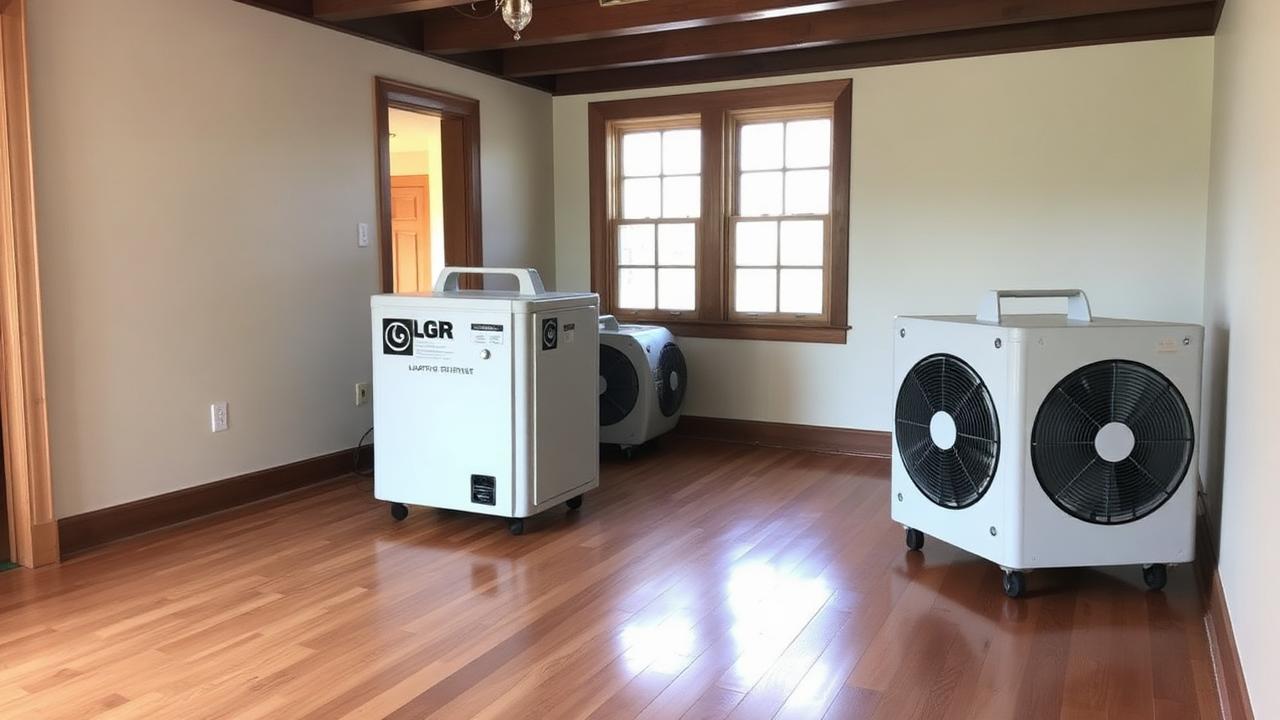
Everyone asks on day one, and any number given on day one is a guess dressed up as a commitment. Drying finishes when the materials reach their dry standard, and how long that takes is set by what got wet, how deeply, and how well the environment is controlled.
What is the honest answer?
The job is done when mapped materials reach the dry standard and hold it — the calendar is an output, not an input. The useful thing to give a customer on day one is not a date but a mechanism plus a first review point: here is what is wet, here is how we will know it is drying, and here is when we will have enough readings to forecast.
After the second full day of readings you usually have a trend, and a trend can be extrapolated honestly. That is a far better conversation than a promised Friday that turns into the following Wednesday because a wall cavity was wetter than the surface suggested.
How long does it take for water to dry?
As long as the slowest wet material in the chamber takes to reach its dry standard — there is no fixed number of days that holds from one loss to the next. Water on a surface goes quickly once the air is moving and dry; water that has soaked into a dense assembly leaves at the pace the material allows, and no amount of equipment rushes it past that. The structural drying guide explains the balance of airflow, dehumidification and temperature that sets that pace, and the daily readings tell you whether it is holding.
How does the class of loss change it?
Class describes how much evaporation the building has to give up and how easily it gives it up, so it is the single best predictor of duration. A small loss into resilient flooring behaves nothing like an overhead loss that soaked a ceiling assembly, and neither behaves like a glued hardwood floor.
Broadly: the more porous the wet materials and the more freely water can reach a surface, the faster the job. The tighter and denser the assembly, the longer. That is the whole reason the classes exist as a scale rather than a label, and the categories and classes guide sets out what separates them. Read Class 4 losses if the wet material is hardwood, plaster, concrete or stone — that is the slow end of the scale, and it is slow for physical reasons rather than procedural ones.
Test yourself
Drying goals, dry standards and class definitions are the exam's favourite way to test whether you understand the process or just the vocabulary. Answer the questions before you look anything up — the gap between what you can recall and what you can recognise is the gap that shows up on exam day.
Which materials set the pace?
The slowest wet material in the chamber sets the finish date, not the average. Everything else can be at goal while a single saturated bottom plate keeps the job open, and pulling equipment because most of the room reads dry is how callbacks happen.
Identify that slowest material early and give it dedicated attention: cavity drying, directed airflow, or removal if the maths says removal is faster and cheaper than a week of equipment. Deciding that on day two instead of day six is one of the largest single levers on the duration of a water loss.
What do you control, and what don't you?
You control the air in the chamber; you do not control the weather, the building's construction, or how long the water sat before you arrived. The controllable part is the vapour pressure difference between the material and the air around it, and holding that difference is what dehumidification is for.
Two uncontrollables deserve mentioning to the customer up front. Ambient conditions matter — a humid week outdoors makes an open building harder to dry, which is why containment and closed-drying discipline pay off. And pre-existing conditions matter: a building that has been damp for weeks before the call arrives with wet materials that are already at the slow end of their drying curve. Check equipment performance against readings rather than assumptions using the psychrometric calculators.
How do you know it is finished?
When the mapped points meet the documented drying goal, measured against a dry standard taken from an unaffected assembly of the same material. A meter reading with no reference point proves nothing; the comparison is the evidence.
Keep taking readings at the same points, with the same meter, at the same depth, every day. Consistency is what makes the trend line credible, and the trend line is what closes the job with the adjuster. The drying log template holds the readings and the equipment record together, and the moisture mapping template keeps the points in the same place from day to day.
Why does a job stall?
Almost always because evaporation and dehumidification have fallen out of balance, or because there is more wet material than the map shows. Flat readings on consecutive visits are a signal to investigate rather than to wait another day.
Work through it in order: check the grain depression across the dehumidifier to confirm it is still removing water, check whether the chamber has been opened or the equipment moved, then re-scan for wet material outside the mapped area. The stall is usually a cavity, a void behind cabinetry, or an assembly that was never opened. The structural drying guide covers the balance between airflow, dehumidification and temperature that keeps a job moving.
New study material by email
New study guides, tools and practice questions, sent as they are published.
No spam. Unsubscribe anytime.
Related Articles


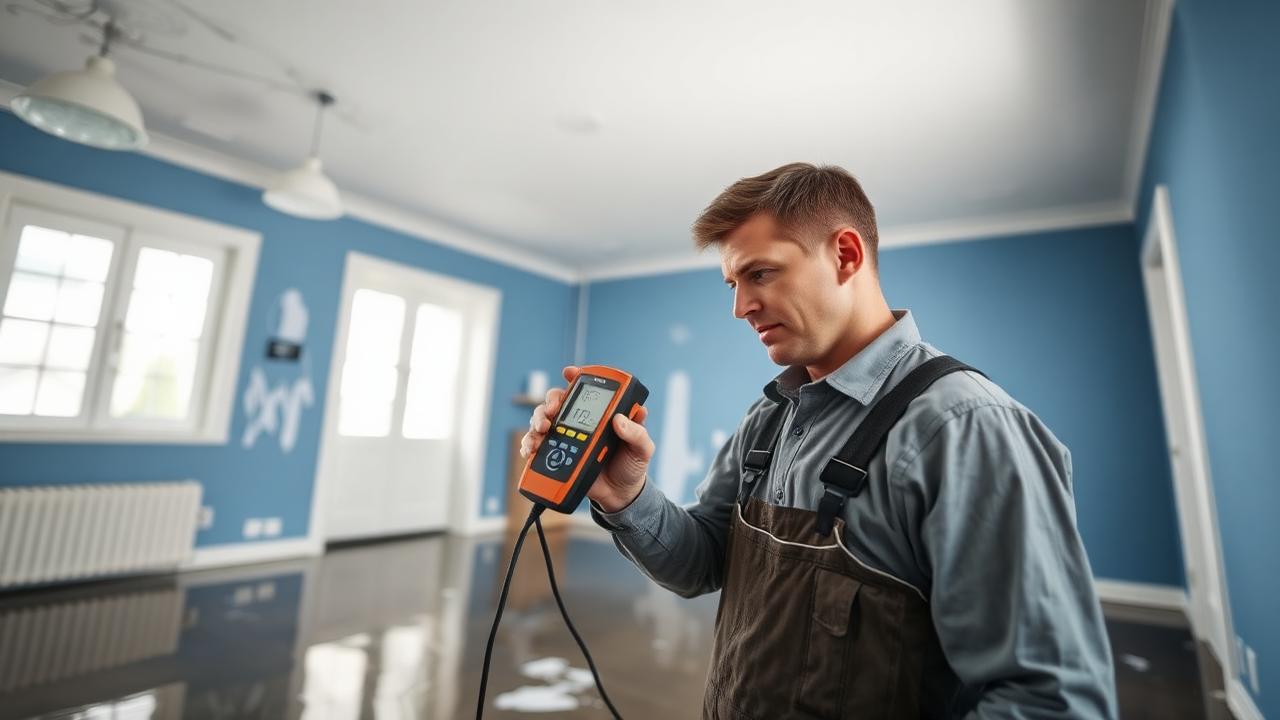
Ready to Pass the WRT Exam?
300+ practice questions, psychrometric calculators for drying, and study modules built by restoration pros.
Need the standard itself? Purchase the ANSI/IICRC S500 →